C-Section Pouch: Why It Happens, How Long It Lasts, and More
You gradually heal from the ordeal of childbirth, the weight problem slowly improves, and your clothes fit well again. However, still, the area around your lower abdomen remains swollen, wrinkled, or heavy. This is not just “baby fat” for a good number of women. It is the pouch resulting from a caesarean section, also referred to as C-section overhang or C-section shelf.
If at any time you look in the mirror and ask, “How come my belly still looks like this even after many months or years?” You are not the only one. The concern ranks among the top concerns after Caesarean delivery, but is rarely discussed.
We will explain what a C-section pouch is, the reasons behind it, the possibility of its self-resolution, and the medical treatments involved, without making misleading promises or creating unrealistic expectations.
What Is a Section Pouch?
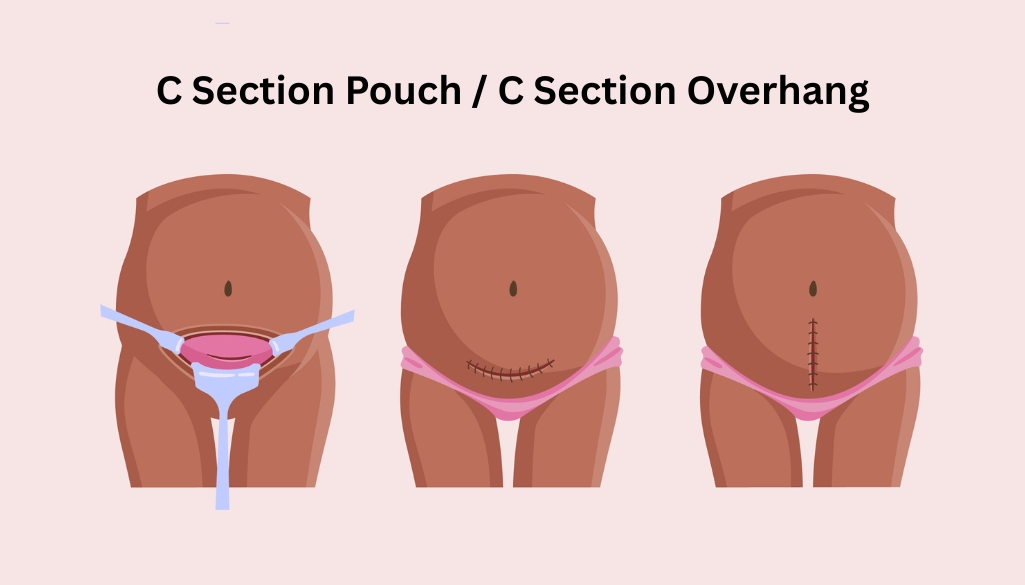
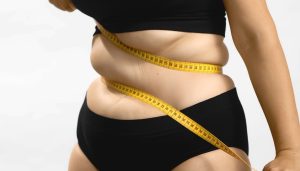
A C-section pouch is a soft or solid bulge that appears on the lower abdomen post-Caesarean birth. It is typically positioned above or around the surgical scar and can feel distinctly different from the rest of the tummy.
You may find it discussed under various terms, such as:
01. C-section shelf
The term refers to the “ledge-like” appearance in which the skin and fat appear to pile up over the scar, creating a visible shelf.
02. C-section belly
A C-section belly usually looks softer or heavier in the lower abdomen compared to the upper stomach area, even when the whole body weight is normal.
03. Post-Pregnancy Pouch
Many women experience a post-pregnancy pouch, but after a C-section, it often becomes more noticeable due to scarring and tissue changes.This pouch is not simply fat. It’s usually a combination of fat after C-section, skin laxity, scar tension, and sometimes deeper muscle changes.
C-Section Pouch vs Normal Post-Pregnancy Belly
Not every postpartum belly is a C-section pouch. Understanding the difference helps set realistic expectations.
01. Lower Belly After C-Section
A lower belly after a section often looks more pronounced and defined, especially around the scar line. The upper abdomen may slim down, while the lower area remains unchanged.
02. Lower Abdominal Pouch After Pregnancy
A lower abdominal pouch after pregnancy can happen after vaginal delivery, too, but it usually improves more evenly with time and exercise.
03. Post-Pregnancy Belly Overhang
A post-pregnancy belly overhang is more likely when excess skin and fat fold forward, which is more common after surgical delivery due to scar tethering.
What Causes a C-Section Overhang?
A C-section overhang doesn’t happen for one single reason. It’s usually a mix of several factors.
01. Surgical Scar Tethering
The C-section scar can attach to deeper layers of tissue, pulling the skin inward and causing fat above it to fold outward.
02. Fat After C-Section
Hormonal changes and reduced mobility during recovery often lead to stubborn fat storage in the lower abdomen.
03. Skin Laxity
During pregnancy, the skin stretches significantly. After surgery, the skin may not return to its original shape, especially in the lower abdomen.
04. Muscle Weakness or Separation
While not always visible, muscle changes can alter how the abdomen supports itself, affecting shape.
05. Healing Pattern Differences
Everybody heals differently. Genetics, age, and scar healing influence how a C-section scar forms.

Ready to achieve your aesthetic goals?
- CQC-Registered Clinic with Nationally Recognised Leadership
- Over a Decade of Surgical & Aesthetic Expertise
- Personalised treatment plans tailored to your needs
Why Do I Have a C Section Pouch Even After Weight Loss?
This is one of the most frustrating experiences for women. Even after shedding kilos, the pouch stays.
01. Fat Distribution Changes
Weight loss doesn’t guarantee fat loss from the lower belly first. This area is hormonally sensitive.
02. Loose Skin Remains
Skin that has lost elasticity doesn’t shrink back with weight loss alone.
03. Scar Pulling Skin Forward
Deep scar attachment can create a permanent fold, regardless of body weight.
04. Muscle Support Isn’t the Same
Exercise strengthens muscles but cannot fully correct muscle separation.
05. Post Pregnancy Pouch Is Structural
A post-pregnancy pouch after a C-section is often structural, not just fat-based.
Will C Section Pouch Go Away on Its Own?
In mild cases, a C-section pouch may reduce slightly over time, especially within the first 6–12 months postpartum. However, once scar tissue settles and skin elasticity is lost, spontaneous improvement becomes less likely.
For many women, the pouch stabilises rather than disappears.
How Long Does C Section Pouch Last?
There’s no universal timeline, but these factors influence duration:
01. Early Healing Phase
Within the first year, swelling reduces and tissues settle.
02. Skin and Fat Adaptation
If the skin doesn’t retract during this phase, the pouch often becomes long-term.
03. Lifestyle and Treatment Choices
Targeted treatments and proper care influence long-term appearance.
Lifestyle Factors That Can Make a C-Section Pouch Worse
Certain habits can exaggerate a C-section belly over time.
01. Sedentary Lifestyle
Lack of movement weakens core support and promotes fat storage.
02. Poor Posture
Slouching pushes the abdomen forward, exacerbating a post-pregnancy belly overhang.
03. Chronic Stress
High cortisol levels encourage lower abdominal fat retention.
Non-Surgical Treatment Options for C-Section Pouch
Non-surgical approaches can help in selected cases, especially when the pouch is mild to moderate.
01. Body Contouring Approaches
Energy-based body contouring treatments target fat and mild skin laxity. These can help smooth the contour, but they have limitations.
02. Skin Tightening Treatments
Radiofrequency-based technologies work by stimulating collagen, helping firm loose skin above the scar.
03. Fat Reduction Treatments
Targeted fat-reduction methods can reduce C-section belly fat, but they do not address muscle separation or excess skin folds.
04. Important Medical Transparency
It’s essential to understand that non-surgical treatments are most effective when excess skin and muscle separation are minimal.
Surgical Options for Severe C-Section Overhang
When the overhang is significant, surgery may be the safest and most effective option.
01. Tummy Tuck (Abdominoplasty)
Removes excess skin and fat while repairing muscle separation.
02. Tummy Tuck With Scar Revision
Improves both abdominal contour and the appearance of the C-section scar.
Ready to achieve your aesthetic goals?
- CQC-Registered Clinic with Nationally Recognised Leadership
- Over a Decade of Surgical & Aesthetic Expertise
- Personalised treatment plans tailored to your needs
03. When Surgery Becomes the Safest Option
Large skin aprons, deep scar pulling, and severe muscle separation usually require surgical correction for reliable results.
Non-Surgical Treatment Options for C Section Pouch
Non-surgical treatments can help improve a mild to moderate C-section pouch, especially when the concern is fat and slight skin looseness. These options aim to smooth and firm the lower abdomen rather than completely flatten it. Results vary depending on skin quality and underlying muscle condition.
01. Body Contouring Approaches
Body contouring treatments use energy-based technology to target stubborn fat and mild skin laxity. They can help soften the bulge above the C-section scar and improve overall belly shape. These treatments work best when the pouch is not severely overhanging. They do not correct muscle separation or large skin folds.
02. Skin Tightening Treatments
Skin tightening treatments focus on firming loose skin above the scar. They stimulate collagen to gradually improve skin texture and tightness. These treatments are helpful when looseness is mild and fat is minimal. Results develop slowly and are usually subtle.
03. Fat Reduction Treatments
Fat reduction treatments target C section belly fat in the lower abdomen. They can reduce soft fullness and improve contour when skin elasticity is good. However, they do not tighten loose skin or address muscle separation. Fat reduction alone cannot correct a hanging overhang.
04. Important Medical Transparency
Non-surgical treatments work best only when excess skin and muscle separation are minimal. They cannot fix severe overhang, deep scar pulling, or significant muscle gaps. A proper assessment is essential to avoid unrealistic expectations.
Surgical Options for Severe C-Section Overhang
When the overhang is more pronounced, surgery often provides the safest and most reliable results.
01. Tummy Tuck (Abdominoplasty)
A tummy tuck removes excess skin and fat from the lower abdomen while repairing muscle separation. It provides the most complete correction for a severe C-section overhang. Results are long-lasting with stable weight.
02. Tummy Tuck With Scar Revision
This procedure combines abdominal reshaping with improvement of the C-section scar. Scar revision helps release tight tissue that pulls the skin inward and worsens the pouch. It improves both contour and scar appearance.
When Surgery Becomes the Safest Option
Surgery is usually recommended when there is a large skin apron, deep scar tethering, or significant muscle separation. Nonsurgical treatments cannot correct these structural issues. Surgical correction offers predictable and lasting results.
Conclusion
A C-section pouch is extremely common and it’s not a personal failure or lack of effort. It’s the result of surgery, healing, hormones, and anatomy working together. While lifestyle changes and non-surgical treatments can help selected cases, severe C-section overhang often needs surgical care for safe and lasting improvement.-section
Understanding what’s actually happening beneath the skin is the first step toward making informed choices.
FAQs
01. Why do I have a C-section pouch even years later?
Because scar tissue, skin laxity, and fat distribution changes can become permanent if not addressed early.
02. Is C-section belly fat different from normal fat?
Yes. C-section belly fat is often more stubborn due to hormonal and surgical factors.
03. Can exercise remove a lower abdominal pouch after pregnancy?
Exercise strengthens muscles, but cannot remove loose skin or scar-related folds.
04. Does a post pregnancy pouch mean something went wrong during surgery?
No. Healing patterns vary widely and are influenced by many natural factors.
05. What causes C-section overhang the most?
The main causes are scar tethering, fat retention, skin laxity, and muscle changes.