When should you get a mole checked? If you notice a change in your mole’s size, shape, or colour, or if it becomes painful, itchy, bleeds, or looks different from your other moles, you should get it checked right away. Most moles are harmless, but changes can sometimes be an early sign of a skin problem that needs care. And it’s always better to be safe than sorry.
In this blog, you will learn what to look for to know if a mole is concerning, so you catch these changes early, when treatment is most effective.
What Is a Mole?
A mole is a small spot on your skin, either flat or slightly raised. Most moles are brown, tan, or pink in colour. They are made by tiny pigment cells in the skin that give colour.
Many people are born with moles, and new ones can appear as we grow. Most moles stay the same for years and cause no harm.
A normal mole usually:
- Has one even colour.
- Has smooth, round edges.
- Does not itch, bleed, or hurt.
- Stays the same in size and shape.
It’s good to know what your moles look like, so you can notice if one starts to change.
When to Get Moles Checked?

It is important to see a doctor if a mole starts to change or shows unusual signs. Early checks help catch problems before they become serious. Here are the main signs to look for:
Change in Size, Shape, or Colour
If a mole grows bigger, changes shape, or the colour becomes darker or uneven, it should be checked. Even small changes can be important. Keep an eye on any mole that does not look the same over time.
Irregular Borders or Asymmetry
A mole with ragged or blurred edges, or one half that does not match the other, is unusual. Normal moles are usually smooth and symmetrical. Irregular moles should be examined by a doctor.
Multiple Colours
A mole with more than one colour, brown, black, red, white, or blue, can be a warning sign. Normal moles are usually one even colour. Any mole with several colours should be checked.
Pain, Itchiness, Crusting, or Bleeding
Any mole that hurts, itches, bleeds, or develops a crust should be seen by a doctor. Even small, ongoing changes in symptoms can be important. Note when these changes happen and tell your doctor.
New or Unhealed Mole
A mole that appears in adulthood or a mark that does not heal after a few weeks needs attention. New marks are more likely to need a professional review. Don’t wait to see if it goes away on its own.

Spot a Mole That Looks Different?
- Our experts can assess and treat it safely.
- Treatments are fast, gentle, and professional.
Large Diameter Moles
Moles larger than about 6mm, roughly the size of a pencil eraser, can be more concerning, especially if they are also changing. Most normal moles are smaller than this. Large moles should be checked regularly.
Dark Spot Under a Nail
A dark line or spot under a fingernail or toenail that wasn’t caused by an injury can be a concern. This is a rare but important sign. It should be checked as soon as possible.
The “Ugly Duckling” Sign
If one mole looks very different from all the others on your body, it could be a warning sign. Most moles tend to look similar. A single mole that stands out deserves a doctor’s attention.
If you notice any of these signs, talk to your doctor right away.
How to Check Your Moles Yourself (Monthly)?
Checking your own moles each month helps you spot any changes early. Try to do this in a bright room with a mirror, or ask someone to help check areas you can’t see easily, like your back. Take clear photos so you can compare your moles over time.
The ABCDE rule helps you know what to look for when checking your moles.
| Feature | What to Look For | Normal Mole | Concerning Mole |
|---|
| A: Asymmetry | One half doesn’t match the other | Both halves look the same | One half looks different from the other |
| B: Border | Edges of the mole | Smooth & neat edges | Rough, jagged or blurred edges |
| C: Colour | Shade/colour of the mole | Same shade all over | Uneven colour or more than one shade (brown, black, red, white, or blue) |
| D: Diameter | Size of the mole | Smaller than 6mm | Larger than 6mm (size of a pencil rubber) |
| E: Evolving | Any change over time | Stays the same | Changes in size, shape, or colour, or becomes raised |
Step-by-Step Self Check for Moles
- Stand in front of a mirror in good light.
- Check your whole body, front, back, arms, legs, feet, scalp, and between your toes.
- Use a small mirror for hard-to-see areas.
- Take photos and note any changes in a diary or your phone.
- If you see any changes, book a mole check at your clinic or with your GP.
Regular checks help you spot changes early, giving you peace of mind and a better chance of early treatment if needed.
Who Should Have More Frequent Mole Checks?
Some people need to have their moles checked more often. This is because their skin or family history can make them more likely to develop changes in moles.
People with Many Moles
If you have 50 or more moles, or some that look different from the rest, it’s good to have a yearly skin check. A doctor can spot small changes that may be hard to notice yourself.
Fair Skin and Light Features
People with fair skin, light eyes, red or blond hair, or freckles can burn easily in the sun. This makes their skin more sensitive and may increase the risk of skin cancer. Regular checks help keep your skin safe.
Family or Personal History of Skin Cancer
If you or someone in your family has had skin cancer before, you may be at higher risk. Having regular mole checks with a doctor or dermatologist can help catch any new changes early.
Past Sunburns or Sunbed Use
Bad sunburns, especially in childhood, or frequent sunbed use can harm your skin. This damage can show up many years later. A yearly mole check is a good way to stay safe.
Regular checks do not take long but can make a big difference. If you are in one of these groups, book a mole check once a year or whenever you notice any change.
Expert Mole Removal Treatment Options
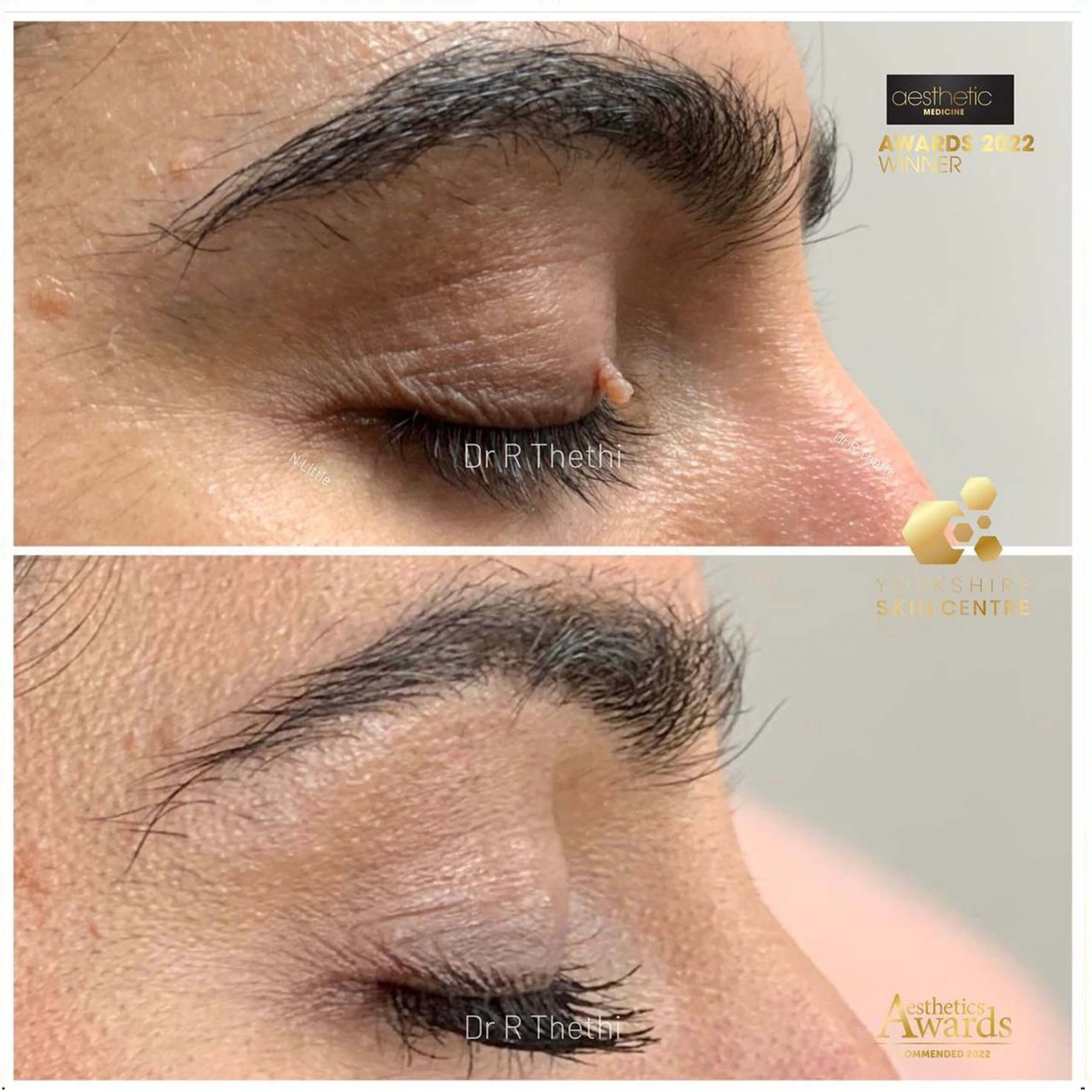
At Yorkshire Skin Centre in Leeds, we offer safe and gentle mole removal options. The best method depends on where the mole is, how big it is, and the type of mole you have.
If you’re wondering how to remove moles from your face, here are some of the most effective and commonly used techniques:
Surgical Excision
The whole mole is carefully cut out under local anaesthetic, so you won’t feel pain. The skin is closed with tiny stitches to help it heal neatly. This method is often used for moles that may need to be tested.
Spot a Mole That Looks Different?
- Our experts can assess and treat it safely.
- Treatments are fast, gentle, and professional.
Shaving
The raised part of the mole is gently shaved off so it sits flat with your skin. It’s quick, leaves only a small mark, and doesn’t usually need stitches.
Cryotherapy
The mole is frozen with liquid nitrogen, which destroys the mole cells safely. After a few days, the mole dries up and falls off on its own.
Electrodessication and Curettage
A small electric current removes the mole while sealing the area at the same time. This helps reduce bleeding and speeds up healing.
Laser Mole Removal
A focused laser light removes small, flat moles without cutting the skin. It’s a great option for surface moles and usually leaves very little to no scarring.
Our doctors will help you choose the best treatment for your skin and make sure the procedure is comfortable and safe from start to finish.
Bottomline on ‘At What Point Is A Mole Concerning?’
Most moles are harmless, but any change in how a mole looks or feels should be checked by a doctor. If a mole grows, changes colour, bleeds, itches, or just looks different from your other moles, it’s best not to ignore it.
Regular skin checks help catch problems early and keep your skin healthy. If you’re unsure about a mole, book a check or mole removal treatment at Yorkshire Skin Centre in Leeds.
Our doctors can examine your skin, give you peace of mind, and remove any mole safely if needed.
FAQs
1. What are three warning signs a mole is becoming cancerous?
A mole that changes in size, shape, or colour could be a warning sign. It may also start to itch, bleed, or look uneven.
2. What does a stage 1 melanoma mole look like?
It often looks like a new or changing mole that’s darker, uneven in colour, or has rough edges. It may grow slowly but looks different from your other moles.
3. Will a GP do a mole check?
Yes. Your GP can check your mole and, if needed, refer you to a specialist or dermatologist for further testing.
4. Can a doctor tell if a mole is cancerous just by looking at it?
A doctor can often spot worrying signs by sight, but to be sure, the mole may need to be removed and tested in a lab.
5. Is melanoma flat or raised?
Melanoma can be either flat or raised. The key is that it looks different from your other moles or changes over time.